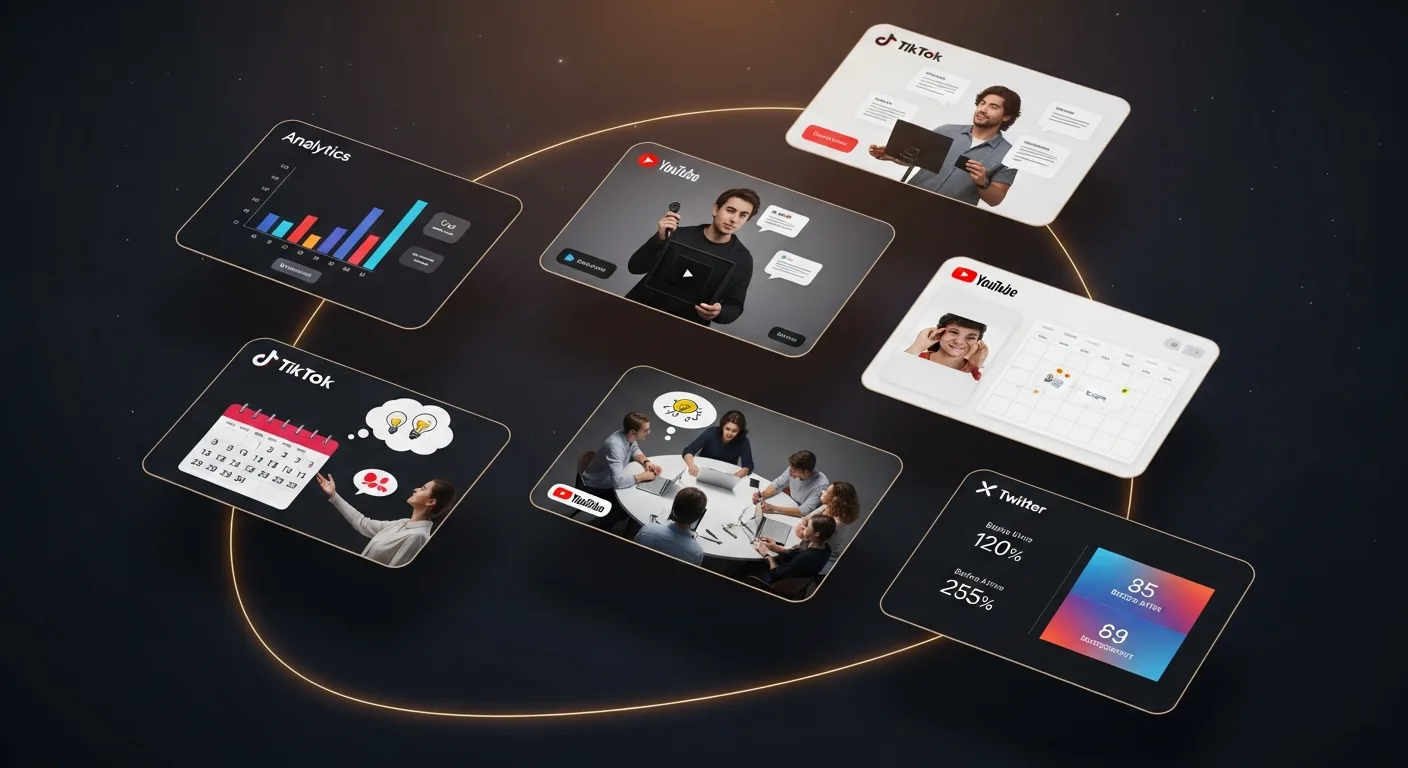
Video now accounts for over 80% of all social media traffic. Every platform has gone video-first — not just TikTok, but Instagram, LinkedIn, Twitter, and YouTube. If you're still posting static images and text updates, you're shouting into a void. But here's the problem: each platform wants something different. Different lengths, different formats, different vibes. Creating native video for five platforms used to mean five separate production workflows. AI changes that entirely.
This is the playbook we use internally and recommend to every social media manager and brand marketer who asks us how to keep up. It's practical, platform-specific, and built around the idea that you should create once and adapt everywhere — not start from scratch five times.
Video Is Eating Social Media
Let's look at what happened in the last 18 months. Instagram's head publicly said they're "no longer a photo-sharing app." LinkedIn's algorithm gives video posts 3x the reach of text posts. Twitter/X launched a full-screen video feed. YouTube Shorts crossed 70 billion daily views. TikTok remains the fastest-growing app on the planet.
The message from every platform is the same: make video or become invisible.
The problem isn't awareness — most marketers know video matters. The problem is production capacity. A single polished social video used to take 2-4 hours: scripting, filming or sourcing footage, editing, adding captions, formatting for the platform, writing the copy. Multiply that by five platforms and a 3x/week posting schedule, and you're looking at 30-60 hours of video work per week. That's a full-time job for just one channel mix.
AI collapses that entire workflow. You can go from idea to platform-ready video in minutes, not hours. But you still need to know what to create for each platform. The AI handles production — strategy is still on you.
Platform-by-Platform: What Actually Works
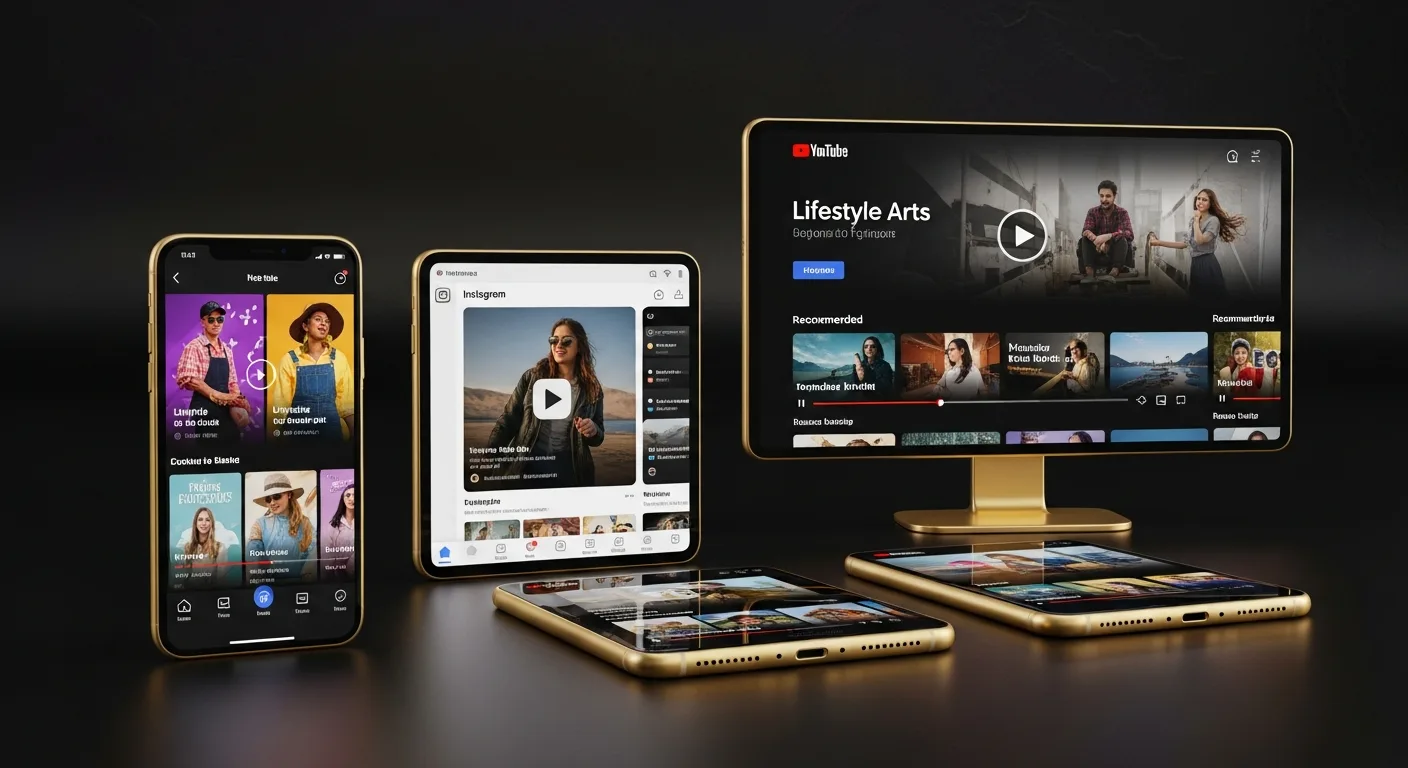
Every platform has its own culture, algorithm preferences, and audience expectations. Posting the same video everywhere is better than posting nothing, but platform-native content outperforms cross-posted content by 2-3x on every metric. Here's what each platform rewards.
TikTok
Format: Vertical (9:16) | Sweet spot: 30-90 seconds | Vibe: Raw, hook-driven, trend-aware
TikTok is the land of the hook. You have roughly 1 second before someone swipes past you. The first frame — the first word — needs to grab attention. "Most people don't know that..." "This is the biggest mistake brands make..." "Here's why your strategy is wrong..."
Content that works: behind-the-scenes, hot takes, quick tutorials, myth-busting, storytelling with a twist ending. TikTok's algorithm doesn't care about your follower count — it cares about watch time and completion rate. A 45-second video that 80% of viewers watch to the end will outperform a 3-minute video where most people drop off at 15 seconds.
Use our Hook Generator to create opening lines that stop the scroll. Test 3-4 different hooks for the same video concept and see which one the algorithm pushes.
Instagram Reels
Format: Vertical (9:16) | Sweet spot: 15-60 seconds | Vibe: Polished, aesthetic, aspirational
Instagram Reels look like TikTok on the surface, but the audience expects higher production quality. Where TikTok rewards raw and spontaneous, Instagram rewards polished and visually cohesive. Think clean transitions, on-brand color palettes, and text overlays that look designed — not slapped on.
Reels are Instagram's biggest discovery engine right now. Non-followers see your Reels in the Explore tab and the dedicated Reels feed, which means this is your best bet for organic growth on the platform. Keep videos short (under 60 seconds performs best), front-load the value, and use 3-5 relevant hashtags.
YouTube Shorts
Format: Vertical (9:16) | Sweet spot: 30-60 seconds | Vibe: Educational, series-driven, curiosity-led
YouTube Shorts has a unique advantage: it feeds directly into your long-form channel. A Short that performs well pushes viewers to your full-length videos. That makes Shorts a top-of-funnel tool — not a standalone strategy.
What works best on Shorts is educational content in a series format. "Day 1 of learning AI video editing..." "Marketing mistake #14..." "3 things about [topic] you didn't know — Part 7." The series format drives subscriptions because viewers want to see what comes next. YouTube's algorithm also explicitly promotes Shorts from channels that also post long-form content, so the synergy is built into the platform.
Format: Square (1:1) or Vertical (9:16) | Sweet spot: 1-3 minutes | Vibe: Professional, thought-leadership, value-dense
LinkedIn is the least competitive platform for video right now, which makes it the biggest opportunity. Only about 1% of LinkedIn users post video content, yet the algorithm heavily promotes it. Native video on LinkedIn gets 5x more engagement than any other content format.
The key difference: LinkedIn videos need native captions baked in, because most users scroll with sound off in professional settings. Content that works: industry insights, contrarian takes on business trends, "here's what I learned from X" stories, process breakdowns, and data-driven analysis. Skip the trending audio — LinkedIn isn't TikTok. Substance wins here.
Twitter/X
Format: Landscape (16:9) or Square (1:1) | Sweet spot: 15-45 seconds | Vibe: Provocative, text-heavy, conversation-starting
Twitter video is all about the hot take. Short, punchy, text-overlay-heavy videos that make someone stop scrolling and engage. Think of it as a tweet in video form — the visual equivalent of a strong opinion that makes people reply.
What works: bold claims with supporting data, "unpopular opinion" format, quick tips with big text overlays, and commentary on trending topics. Twitter rewards conversation, so the best-performing videos are the ones that provoke a response — agreement, disagreement, or "I never thought of it that way."
The Comparison: Every Platform at a Glance
Here's your quick reference for platform specs:
| Platform | Format | Optimal Length | Aspect Ratio | Best Content Type |
|---|---|---|---|---|
| TikTok | Vertical | 30-90 sec | 9:16 | Hooks, trends, storytelling |
| Instagram Reels | Vertical | 15-60 sec | 9:16 | Aesthetic, tutorials, discovery |
| YouTube Shorts | Vertical | 30-60 sec | 9:16 | Educational series, curiosity |
| Square/Vertical | 1-3 min | 1:1 or 9:16 | Thought leadership, insights | |
| Twitter/X | Landscape/Square | 15-45 sec | 16:9 or 1:1 | Hot takes, data bites, commentary |
The Repurposing Strategy: Create Once, Publish Everywhere
Here's where AI makes the biggest impact on your workflow. Instead of creating five separate videos for five platforms, you create one core piece of content and adapt it for each platform. This is the "content pillar" approach, and it's how every efficient social media team operates — see how marketing agencies produce weeks of client content in hours using this exact system.
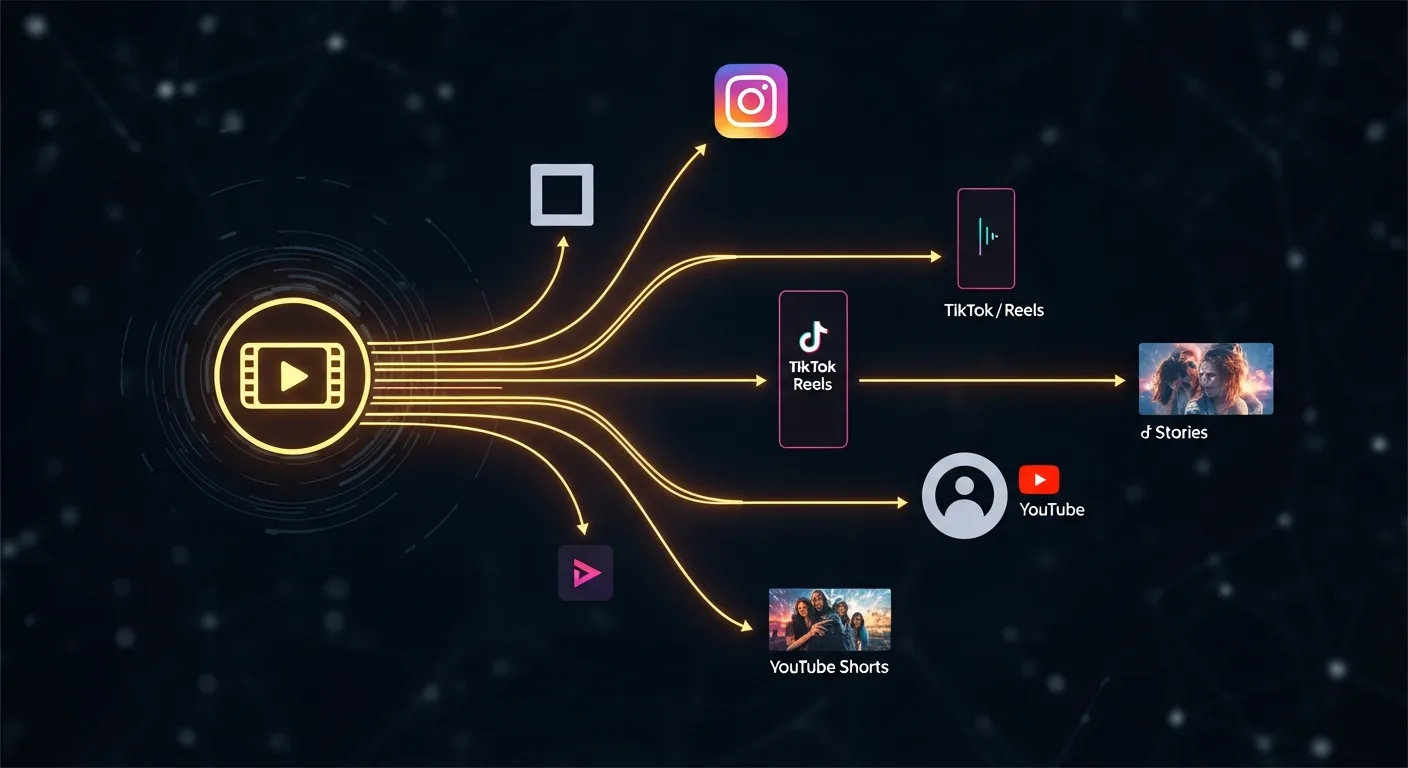
The workflow looks like this:
- Create a long-form video (3-10 minutes) as your anchor content. This could be a YouTube video, a podcast clip, or a detailed explainer.
- Extract the best moments — the hooks, the key insights, the quotable lines, the surprising data points.
- Reformat each clip for the target platform: adjust aspect ratio, add platform-appropriate captions, tweak the pacing, change the opening hook.
- Post natively on each platform with platform-specific copy and hashtags.
One 5-minute YouTube video can become: a 60-second TikTok hook, a 30-second polished Instagram Reel, a 45-second educational YouTube Short, a 2-minute LinkedIn thought-leadership clip, and a 20-second provocative Twitter snippet. That's five pieces of content from one production session.
Our Repurpose Tool is built specifically for this workflow — feed in your anchor video and get platform-optimized cuts back, formatted and ready to post.
Using AI to Create Platform-Native Content
AI video tools aren't just about speed — they solve the biggest pain point in social media video: format flexibility. Traditionally, if you shot a video in landscape, converting it to vertical meant awkward cropping or black bars. If your video was 5 minutes, cutting it to 30 seconds meant losing context.
With AI generation, you're not converting existing footage — you're creating content purpose-built for each format. Need a 45-second vertical video for TikTok with a hook-first structure? Generate exactly that. Need a 2-minute square video for LinkedIn with built-in captions? Generate exactly that. The AI doesn't crop or compromise. It creates. Curious how different tools stack up for this? Read our honest AI video generator comparison.
Here's how to think about it practically:
- Start with your best-performing content ideas. Use our Ideas Generator to brainstorm topics that have proven engagement potential across platforms.
- Generate your anchor video first. This is usually the longest, most detailed version — typically for YouTube or LinkedIn.
- Create platform variants. Use the same core message but with different hooks, lengths, and visual styles tuned for each platform.
- Batch your production. Generate all five platform variants in one session. AI handles the production in minutes, so batching a full week of content takes an hour, not a week.
Building a Weekly Content Calendar with AI
Consistency beats creativity on social media. Posting three decent videos per week will always outperform posting one masterpiece per month. But consistency requires a system — and that's where a content calendar becomes essential.
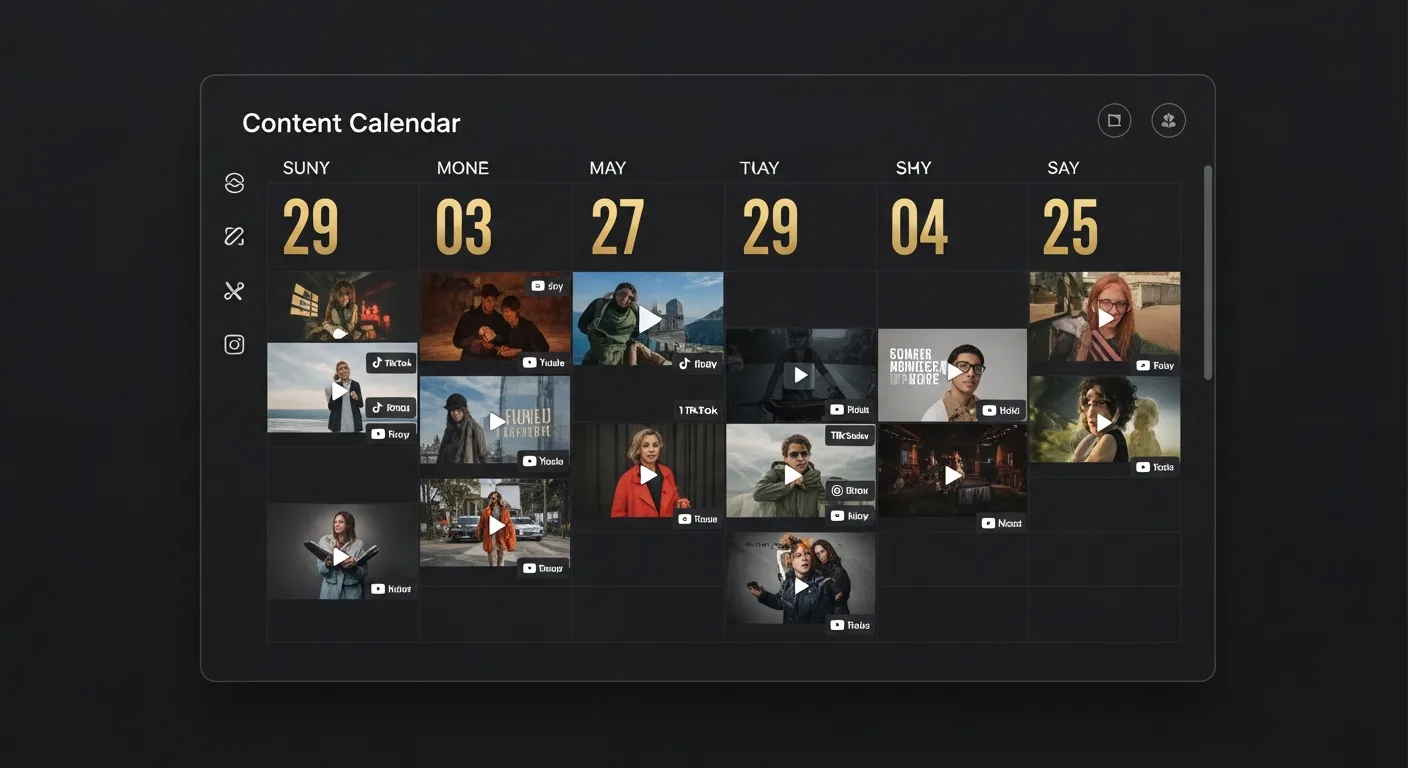
Here's a weekly content calendar template that works for most brands:
| Day | Content Theme | Primary Platform | Repurpose To |
|---|---|---|---|
| Monday | Industry insight or data point | Twitter, Instagram | |
| Tuesday | Quick tutorial or how-to | TikTok | Reels, Shorts |
| Wednesday | Myth-busting or contrarian take | Twitter/X | TikTok, LinkedIn |
| Thursday | Deep-dive explainer (anchor content) | YouTube | All platforms |
| Friday | Behind-the-scenes or story | Instagram Reels | TikTok, Shorts |
Notice the pattern: each day has a primary platform (where the content is created natively) and repurpose targets (where adapted versions get posted). This means you're posting to every platform multiple times per week without creating unique content for each one every day.
With AI handling production, this entire calendar — five primary videos plus repurposed variants — takes roughly 2-3 hours per week. That includes ideation, generation, review, and scheduling. Compare that to the 30-60 hours it would take to produce the same volume manually.
Measuring Success Across Platforms
Different platforms have different success metrics, and the mistake most people make is measuring everything the same way. Here's what actually matters on each:
- TikTok: Watch-through rate and shares. If people watch your video to the end and share it with friends, the algorithm explodes your reach. Views alone don't tell the full story.
- Instagram Reels: Saves and reach to non-followers. Saves signal that your content has lasting value. Non-follower reach tells you the algorithm is pushing your content into discovery.
- YouTube Shorts: Subscriber conversions. The whole point of Shorts is to funnel viewers into your long-form content and channel. Track how many Short viewers subscribe.
- LinkedIn: Comments and dwell time. LinkedIn's algorithm weighs thoughtful engagement more than likes. A post with 20 detailed comments will outperform one with 200 likes.
- Twitter/X: Replies and quote tweets. Twitter values conversation. A video that sparks debate or discussion gets pushed far beyond your follower base.
The meta-metric across all platforms is attention. Are people watching? Are they engaging? Are they coming back for more? If yes, the algorithm on every platform will reward you. The specific numbers differ, but the underlying principle is the same: hold attention, and the platform does your distribution for you.
The 2026 Social Video Landscape
Three trends are shaping where social video goes from here:
1. Short-form is table stakes, not a strategy. Every brand is posting Reels and TikToks now. The window of "just show up and win" is closing. Differentiation comes from quality, consistency, and having a genuine point of view — not from simply being present.
2. Vertical video is the default format. Even LinkedIn and Twitter — traditionally horizontal platforms — are shifting toward vertical feeds. If you're still thinking in landscape-first, you're building for yesterday's internet.
3. AI-powered creators will out-publish everyone else. The brands and creators using AI to handle production will post 3-5x more content than those doing everything manually. In an attention economy, volume with quality is an unfair advantage. And the quality gap between AI-generated and manually produced social video has effectively closed.
The social media managers and agencies that figure out AI-powered production workflows now will dominate the next 2-3 years. The ones who wait will spend the next 2-3 years trying to catch up.
Start Building Your Social Video Engine
You don't need a bigger team. You don't need a bigger budget. You need a system: know what each platform wants, create anchor content that can be repurposed, use AI to handle production at scale, and post consistently. Not sure where to start? Pull a month of content angles out of the free Ideas Generator, then see what producing them costs on any plan.
The tools exist. The playbook is here. The platforms are begging for more video content. The only variable left is whether you start this week or keep putting it off.
Ready to build your social video pipeline? Start creating social-ready videos — generate your first platform-native video in minutes, not hours.